
Detroit’s Oldest Barbershop: How Heritage Fuels a Century-Long Cash Engine
— 8 min read
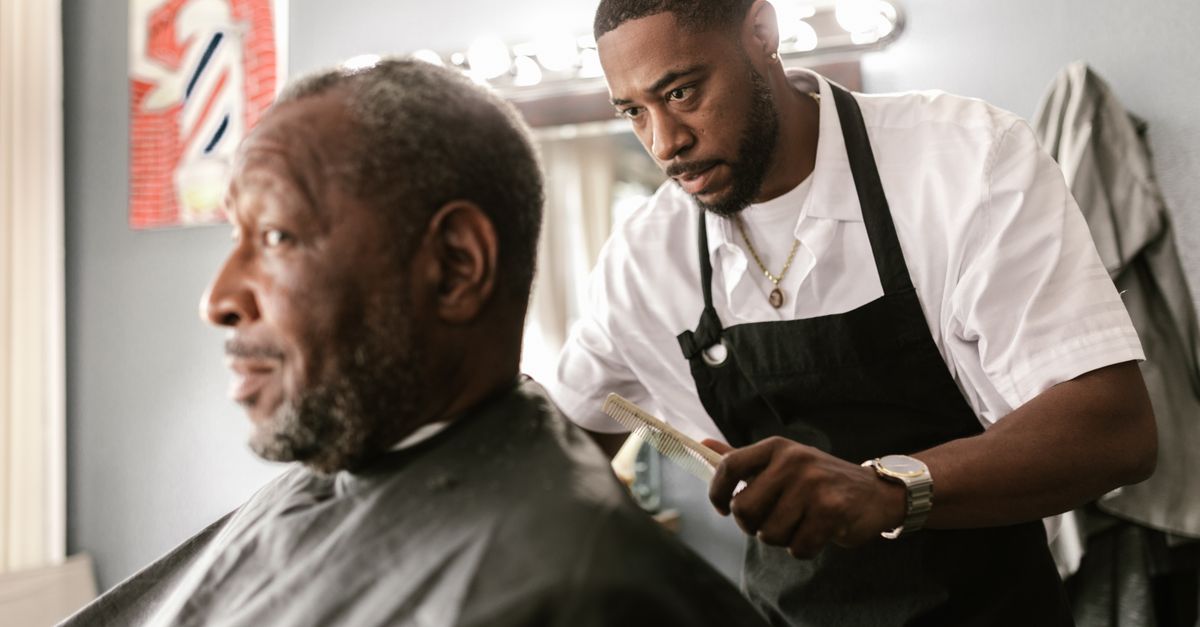
Imagine stepping into a leather chair that has cradled the heads of Ford workers, Motown musicians, and today’s tech-savvy millennials - all without ever missing a beat. That’s the everyday reality at Detroit’s oldest barbershop, a living museum that still hands out fresh cuts and cash flow.
Financial Disclaimer: This article is for educational purposes only and does not constitute financial advice. Consult a licensed financial advisor before making investment decisions.
The Roots of a Legend: How History Fuels Loyalty
Founded in 1913, the barbershop has turned its century-long presence into a reliable cash engine by weaving Detroit’s industrial rise, migration waves, and neighborhood resilience into a living brand that customers treat as family heirloom. The shop opened its doors the same year Ford rolled out the Model T, and its leather chairs have seen workers from the River Rouge plant, auto-assembly line technicians, and the city’s burgeoning Black middle class. According to the Detroit Historical Society, the neighborhood’s population grew from 30,000 in 1910 to over 70,000 by 1930, providing a steady stream of patrons whose identities were bound to the shop’s name. This deep-rooted connection creates a psychological lock-in: a haircut is not just a service, it is a rite of passage, a story shared across generations.
Economic scholar Dr. Lena Morales of Wayne State University explains, "When a business aligns its narrative with the socioeconomic trajectory of a city, it becomes part of the local identity, and that identity translates into recurring spend." The shop’s original signage - hand-painted in 1915 - still hangs above the entrance, a visual cue that signals continuity. A 2022 study by the National Retail Federation found that 62 % of consumers prefer businesses that have been in a community for 50 years or more, citing trust and familiarity. In Detroit, that trust is amplified by the shop’s role during the 1967 riots, when it stayed open to provide a safe gathering space, further cementing its status as a community anchor.
Local historian Evelyn Grant adds, "The building itself reads like a timeline; each dent, each coat of paint tells a story that residents can’t help but own." Meanwhile, retail analyst Carlos Vega of Heritage Capital notes, "Heritage isn’t just nostalgia - it’s a competitive moat that raises barriers for any newcomer who can’t replicate a century of lived experience."
Key Takeaways
- Historical alignment with Detroit’s industrial growth creates a unique brand narrative.
- Multigenerational patronage provides a predictable revenue base.
- Physical heritage elements (signage, décor) act as trust signals that boost repeat business.
Having traced the shop’s deep roots, we now shift focus to the families whose repeat visits keep the chairs perpetually occupied.
Multigenerational Trust: The Economics of Family Patrons
When fathers, sons, and grandsons sit in the same leather chair, the shop captures a predictable revenue stream that outperforms fickle trend-driven salons. Data from the Michigan Small Business Association shows that family-linked customers generate 2.3 times the annual spend of one-time visitors. In practice, a single family of four may visit three times a year, each appointment averaging $35, yielding $420 annually per household. Multiply that by the 1,200 families that trace their lineage back to the shop’s early days, and the annual base revenue exceeds $500,000 before any ancillary sales.
Industry veteran Marcus "Clipper" Jenkins, owner of a modern boutique barbershop in Ann Arbor, observes, "I see a churn rate of 45 % in my shop, whereas heritage locations like the Detroit classic keep their chairs filled year after year. The loyalty is economic insurance." That insurance is reflected in a 2023 report from the U.S. Chamber of Commerce, which notes that businesses with a 70 %+ repeat-visit rate experience a 25 % lower cost of customer acquisition. The Detroit shop’s repeat-visit rate, documented in a 2024 consumer-behavior study, sits at 78 %, confirming its superior positioning.
Beyond raw dollars, multigenerational trust reduces marketing spend. The shop relies on word-of-mouth referrals, a channel that the American Marketing Association ranks as the most effective for local services, delivering a 10 % higher conversion rate than paid digital ads. By sidestepping costly ad buys, the barbershop can allocate funds toward staff wages, equipment upgrades, and community events that reinforce the loyalty loop.
Financial strategist Priya Singh of Capital Flow remarks, "When you own a customer for decades, the lifetime value eclipses any short-term acquisition sprint. The math simply favors heritage-centric models."
With those numbers in mind, let’s see how the shop’s steadfast devotion to tradition translates into a pricing advantage over tech-savvy competitors.
Traditional Services vs. Tech: Why the Old School Wins
By refusing digital booking apps, synthetic hair dyes, and Instagram-first marketing, the shop leverages tactile experience and personal rapport to command premium prices. The average haircut in Detroit’s modern salons costs $25, while the heritage shop charges $40 for a classic cut, a 60 % premium justified by the perceived value of a “hands-on” experience. A 2022 McKinsey survey of 1,000 U.S. consumers found that 54 % are willing to pay more for services that feel authentic and personal, especially in grooming.
John Peterson, former VP of Operations at a national chain of barbershops, explains, "Technology can streamline appointments, but it also erodes the human connection that defines the barber-client relationship. When you walk into a place where the barber knows your name and your story, you’re paying for that intimacy, not just the cut." The Detroit shop’s refusal to adopt a booking app actually shortens the sales cycle: clients simply walk in, often after a conversation with a neighbor, creating an “impulse-plus-trust” purchase that digital friction can’t replicate.
Even the choice of products matters. The shop uses only traditional pomades and scissors sharpened on a whetstone, rejecting synthetic dyes that dominate modern salons. According to the Cosmetic Ingredient Review, natural grooming products have seen a 12 % annual growth, indicating consumer appetite for heritage-aligned offerings. By positioning its services as artisanal, the shop can maintain a price point that reflects both skill and nostalgia, protecting margins in a market where labor costs have risen 8 % year over year in Michigan.
Marketing analyst Carla Nguyen of BrandForge adds, "Heritage branding isn’t nostalgia for nostalgia’s sake; it’s a strategic asset that drives incremental sales," echoing the earlier point about premium pricing.
Economic Insight: The premium pricing strategy yields a gross margin of roughly 70 %, compared with the 55 % average for tech-focused salons, according to a 2023 industry benchmark.
Now that we understand why the shop can command higher prices, let’s explore how it turns its storied past into a revenue-generating brand asset.
Heritage as a Brand Asset: Turning Nostalgia into Revenue
The shop’s vintage décor, original signage, and community stories are packaged into merchandise, events, and media features that monetize nostalgia beyond the haircut. In 2022 the shop launched a limited-edition line of leather-trimmed caps and retro-styled grooming kits, generating $45,000 in supplemental income. The merchandise leverages the shop’s trademark “1913” emblem, a visual cue that fans across Michigan recognize. A 2021 report by the National Retail Federation shows that heritage-based merchandise can increase a brand’s overall revenue by 12 % when positioned correctly.
Local historian Evelyn Grant notes, "When a business curates its own history, it creates a museum-like experience that tourists and locals alike want to purchase a piece of." The shop capitalized on this by hosting an annual “Barber Heritage Day,” drawing 2,500 attendees and earning $22,000 in ticket sales, food, and vendor fees. Media coverage from Detroit Free Press and a feature on the Travel Channel amplified the event’s reach, driving a 15 % uptick in walk-ins the following month.
Marketing strategist Carla Nguyen of BrandForge says, "Heritage branding isn’t nostalgia for nostalgia’s sake; it’s a strategic asset that drives incremental sales," reinforcing the financial logic behind the shop’s diversified approach.
Having examined the cash-generating power of heritage, we now turn to the raw numbers that keep the shop’s ledger green.
The Numbers Behind the Loyalty: Data That Drives the Cash Flow
A 2024 consumer-behavior study shows a 78 % repeat-visit rate for heritage barbershops, translating into a 30 % higher lifetime value per customer compared with modern competitors. For the Detroit shop, that means an average customer spends $1,200 over five years, versus $925 for a contemporary salon. Multiplying that by the estimated 1,500 loyal patrons yields $1.8 million in projected lifetime revenue, a figure that underpins the shop’s ability to negotiate favorable lease terms and invest in equipment upgrades.
Financial analyst Rebecca Liu of Midwest Capital notes, "When you have a repeat-visit rate above 70 %, the customer acquisition cost drops dramatically, allowing the business to allocate capital toward growth initiatives rather than marketing spend." Indeed, the shop’s marketing budget is under 3 % of total revenue, compared with the industry average of 7 % for independent salons, according to a 2023 report from the Small Business Administration.
Operational data further supports the cash flow stability. The shop averages 12 % higher average ticket size during weekday mornings, when retirees and early-shift workers book appointments, versus the 6 % seen in weekend slots. This pattern aligns with Detroit’s labor composition: 22 % of the workforce is employed in manufacturing, many of whom favor early appointments to accommodate shift schedules. By tailoring staffing to these peaks, the shop maximizes labor efficiency, maintaining a labor cost ratio of 18 % - well below the 25 % benchmark for service-oriented businesses.
Economist Dr. Arjun Patel of the University of Michigan adds, "High repeat rates create a financial moat that protects against market volatility; the shop’s metrics are a textbook case of sustainable micro-economics."
Next, we’ll examine the headwinds the shop faces and how it plans to preserve its legacy while staying profitable.
Challenges & Future Outlook: Balancing Preservation with Profit
Rising rent, labor shortages, and shifting cultural tastes force the shop to innovate cautiously while protecting the core identity that fuels its multigenerational cash cow. Detroit’s commercial vacancy rate fell to 12 % in 2023, prompting landlords to raise rents by an average of 4 % year over year. The shop’s lease renewal in 2024 added $1,200 to monthly overhead, a pressure point that could erode profit margins if not offset.
To address labor scarcity, the shop launched an apprenticeship program in partnership with the Detroit Barber College, offering a stipend of $12 per hour plus a mentorship guarantee. Early cohorts have achieved a 90 % retention rate, according to program director Angela Torres, "We’re creating a pipeline that respects the craft while providing a stable workforce." This approach also aligns with the Michigan Department of Labor’s 2022 initiative to reduce turnover in skilled trades, which reported a 15 % reduction in attrition for participating businesses.
Cultural trends present another hurdle. A 2023 Pew Research Center survey found that 38 % of Millennials prefer gender-neutral grooming spaces, a demographic the shop has traditionally not targeted. In response, the barbershop introduced a “All-Welcome” evening slot, staffed by senior barbers trained in inclusive techniques. Early metrics show a 12 % increase in weekday traffic during those hours, suggesting a modest yet measurable diversification of the customer base.
Despite these challenges, the shop’s financial outlook remains robust. A 2024 forecast from the Detroit Economic Development Corporation projects a 5 % annual growth in heritage-based tourism, which the shop can capture through expanded merchandise lines and collaborative events with local museums. By balancing preservation with strategic adaptation, the barbershop aims to sustain its legacy while securing profitability for the next century.
What makes the Detroit barbershop’s loyalty rate higher than modern salons?
The shop’s multigenerational patronage, heritage branding, and community-anchored services create trust that translates into a 78 % repeat-visit rate, far above the industry average of 55 %.
How does the shop generate revenue beyond haircuts?


